


EN



𝐂𝐥𝐢𝐦𝐚𝐭𝐞-𝐑𝐞𝐬𝐢𝐥𝐢𝐞𝐧𝐭 𝐀𝐠𝐫𝐢𝐜𝐮𝐥𝐭𝐮𝐫𝐞 𝐚𝐧𝐝 𝐅𝐚𝐫𝐦𝐞𝐫𝐬
Climate change impacts strike directly at the heart of agriculture. That’s why BURO Bangladesh, under the SMAP project, works across the country to help farmers adopt sustainable and climate-resilient agricultural practices. BURO forms 25–30-member farmergroups, where participants discuss the impacts of climate change, sharesustainable farming techniques, and learn how to adapt to unpredictableweather.
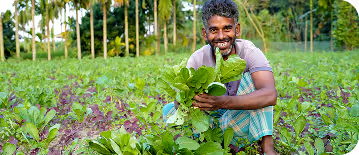
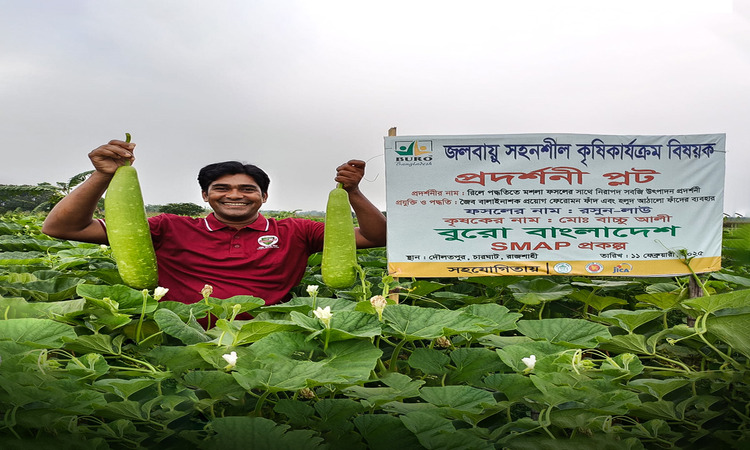
Md. Bacchu Ali, a farmer from Daulatpur, Rajshahi, is a member of one such group. With technical support from BURO Bangladesh, he transformed his field into a demonstration plot. Using the relay cropping method, he grew bottle gourd alongside garlic, earning quick returns by selling the bottle gourd before the full garlic harvest was ready. He also used pheromone and yellow sticky traps instead of chemical pesticides. This approach offers several benefits:
✅ 𝐃𝐨𝐮𝐛𝐥𝐞 𝐭𝐡𝐞 𝐘𝐢𝐞𝐥𝐝: Bottle gourd & garlic relay cropping promotes healthier soiland increases harvests.
✅ 𝐙𝐞𝐫𝐨 𝐂𝐡𝐞𝐦𝐢𝐜𝐚𝐥𝐬: Pheromone & yellow sticky traps provide safe, natural pestcontrol.
✅ 𝐑𝐞𝐚𝐥 𝐑𝐞𝐬𝐢𝐥𝐢𝐞𝐧𝐜𝐞: The chosen crops are more resilient to unpredictable weather and pests.
His demonstration plot has becomean open classroom, where neighboring farmers learn by seeing practicalexamples. Through this, the foundation for climate-resilient agriculture isbeing built, enhancing food security.
Reflecting on his experience, Bacchu Ali said,
“Many farmers visited mydemonstration plot and saw the insects trapped in the pheromone and yellowsticky traps. They were convinced that these environmentally friendly methodsare effective and that achieving a bumper yield is possible without relying onchemical pesticides.”
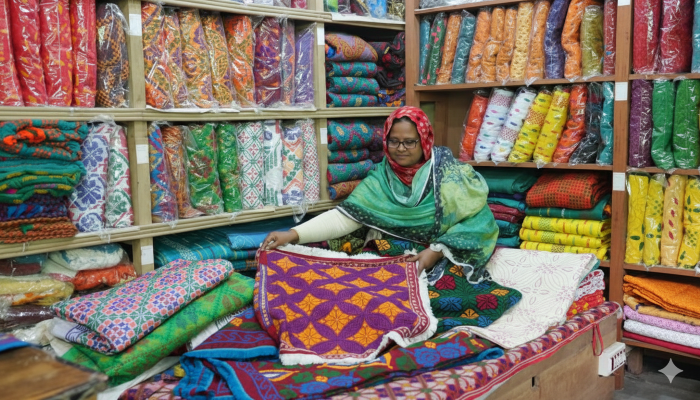
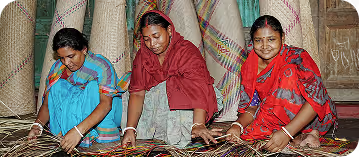
Micro, Small, and MediumEnterprises (MSMEs) are the backbone of Bangladesh’s economy—driving growth,creating employment, and fostering entrepreneurship. The development of thissector paves the way for financial inclusion, women’s empowerment, and a self-reliantsociety.
BURO Bangladesh has long beencommitted to supporting MSME entrepreneurs—not just with financing, but throughskill development, guidance, and long-term support. This holistic approach isnurturing a new generation of capable, socially responsible entrepreneurs.
Mostary Khatun from ChapaiNawabganj is a shining example of this transformation. With support from BUROBangladesh, she now employs over 500 workers through her enterprise. Beyondbusiness, she is empowering adolescent girls by providing training and employmentopportunities, actively preventing child marriage and fostering a more awareand self-reliant generation.
On this MSME Day 2025, let’scelebrate Mostari Khatun’s inspiring journey of economic success and social impact.
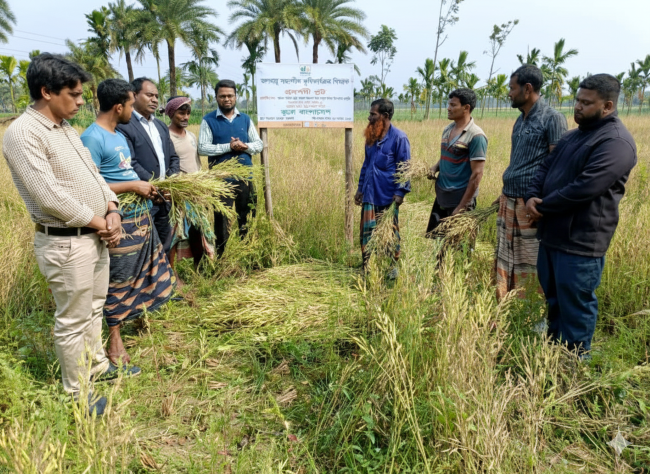
Just before harvesting his Aman paddy, Alal Uddin of Koidanga village did something unusual in his community:he broadcast mustard seeds (Bari-17) across his standing crop. No tilling. Noextra labor.
Ten days later, when the paddywas harvested, his field revealed a surprise—lively mustard seedlings thrivingbeneath the cut stalks. In just 85 days, he harvested 204 kilograms of mustardfrom one bigha (0.33 acres) of land, more than he had hoped.
Since Bari-17 is a short-durationvariety, Alal now grows three crops annually on land that previously yieldedonly two: Aman paddy, mustard, and maize.
𝗧𝗵𝗶𝘀 𝗶𝘀 𝗮 𝘀𝘁𝗼𝗿𝘆 𝗼𝗳 𝗹𝗼𝗰𝗮𝗹 𝗸𝗻𝗼𝘄𝗹𝗲𝗱𝗴𝗲 𝘂𝗻𝗶𝘁𝗶𝗻𝗴 𝘄𝗶𝘁𝗵 𝘀𝗺𝗮𝗿𝘁 𝘀𝘂𝗽𝗽𝗼𝗿𝘁—𝗮𝗻𝗱 𝗼𝗳 𝗮 𝗳𝗮𝗿𝗺𝗲𝗿 𝘄𝗵𝗼 𝗯𝗲𝗹𝗶𝗲𝘃𝗲𝗱 𝗰𝗵𝗮𝗻𝗴𝗲 𝗰𝗼𝘂𝗹𝗱 𝗯𝗲𝗴𝗶𝗻 𝗶𝗻 𝗵𝗶𝘀 𝗳𝗶𝗲𝗹𝗱.
Most Rajshahi farmerstraditionally grow just two crops yearly—Aman paddy, followed by either Bororice or maize. This system often leaves fields idle or demands excessiveirrigation for Boro rice, increasing costs while underutilizing land.
Now, farmers like Alal areadopting relay cropping with mustard, maximizing land productivity and profits.
BURO Bangladesh'sclimate-resilient agriculture initiative made this possible. The programtrained a local farmer group in relay cropping, conservation agriculture,improved variety selection, and optimal crop rotation. As a participant, Alalhosted a demonstration plot showcasing no-till mustard cultivation after Amanrice.
The relay method eliminated theneed for separate tillage for mustard. Rice stubble served as natural mulchafter pre-harvest seeding, retaining soil moisture, reducing irrigation needs,and recycling residual nutrients, avoiding additional fertilizer costs.
His total cost? 𝗕𝗗𝗧 𝟲,𝟳𝟰𝟬.
Revenue? 𝗕𝗗𝗧 𝟭𝟴,𝟯𝟲𝟬.
Net profit from land thatwould’ve stayed fallow? 𝗕𝗗𝗧 𝟭𝟭,𝟲𝟮𝟬.
In drought-prone Rajshahi, thehigh water demand of Boro rice is becoming unsustainable. As a result, BUROBangladesh promotes maize as a water-efficient alternative to Boro rice. WhileBoro requires 25–30 irrigations, maize needs just 4–5, significantly cuttingcosts.
Alal’s success has inspiredneighboring farmers to adopt the model—a low-input, high-return approachcreating new possibilities for smallholder farmers.
Through credit support,climate-appropriate crop recommendations, and technology demonstrations, BUROBangladesh is transforming agricultural practices across Bangladesh.
%20(2).jpeg)
The morning sun had barely risen when Asma stepped into the dew-soaked field to cut grass, the hem of her saridarkened with dampness. Behind her, whispers carried the weight of judgment: “ So now the wife will go to the fields to cut grass?”
But Asma had already steppedbeyond the threshold, and once a woman crosses that line, the world can nevermake her smaller again.
Today, Asma runs a thriving dairybusiness with 18 cattle producing up to 90 kg of milk a day, earning 1.2million BDT in annual profit, employing two local workers, and owning 48decimals of land and a market shop. Her success funds her eldest son’s engineeringdegree, supports her younger son’s schooling, and provides regular meals for 10orphans in her community.
It began in 2019, when her husband's single income could no longer cover household costs and her two sons 'education fees. With a BURO Bangladesh agricultural loan of 100,000 BDT, Asma bought a dairy cow and began supporting her household by selling its milk. She chose cattle rearing as her main profession, investing all her focus inbuilding a small livestock venture. She learned to care for the cattle herself, manage feed, and negotiate milk prices in the market. Also, Asma completed a three-month livestock management training course at Faridpur Youth Development Center.
With income from milk sales, Asmagradually expanded her farm, taking successive loans from BURO Bangladesh topurchase additional cows and improve infrastructure - all repaid through herdairy profits.
Expansion wasn’t just business growth; it was defiance. In a conservative community where women were expected to “stay inside and do women’s work,” every trip to the market or fieldchallenged social norms.
What is ordinary labor for othersbecomes, for her, a daily defiance.
Asma Binte Rashid did not grow up with the luxury of choice. So, she did what she could do best: work tirelessly, without taking those words into consideration. By choosing to fight backagainst ridicule and stand tall against discouragement, she has redrawn the boundariesof what women in her community can be.
“As a woman, even my smallest mistakes felt magnified, as if proving my incapability. People’s words cut deeper than the work itself. Those words still stay with me, but now they are a reminder to never stop. Today, the same community that once ridiculed me sees me as an example of what women can achieve,” Asma concludes.
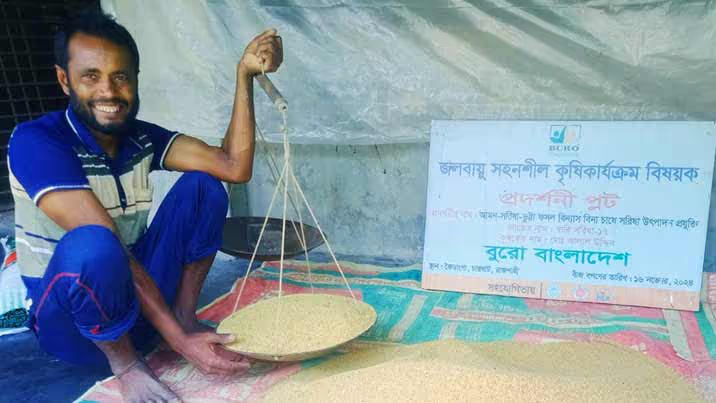
Facing the climate crisis in Rajshahi's Kaidanga village, Alal Uddin achieved three harvests in a year: Aman rice, mustard (BARI-17), and maize. Utilizing BURO Bangladesh’s relay cropping method, he planted mustard just before his rice harvest. In 85 days, he yielded an impressive 204 kg of mustard. This cost-effective, water-saving approach eliminated tilling and leveraged residual nutrients, reducing expenses and generating significant income from previously fallow land.
With Rajshahi's drought conditions hindering water-intensive crops like Boro rice, BURO promotes maize and mustard as sustainable alternatives. Alal’s success has inspired other farmers to adopt this method, paving the way for sustainable agriculture and increased earnings in the region.
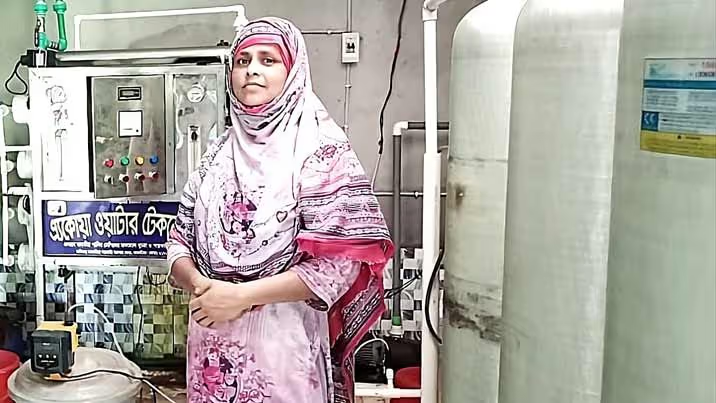
Nasima Begum from Bhurulia village in Shyamnagar, Satkhira, has significantly improved the lives of people across several villages by tackling the local water crisis. In an area where women once walked long distances daily for clean water, Nasima, having faced the same hardship, became a beacon of hope. Starting with small-scale farming while her husband worked abroad, her ambition was to provide clean water to her community. Despite initial setbacks with a small purification plant, she persevered, joined BURO Bangladesh, secured a loan, and installed a modern water purification system.
Today, her plant supplies thousands of liters of affordable purified water daily to neighboring villages, even offering free water to those in need. Her dedication has not only made her self-sufficient but has also ensured access to safe drinking water for her entire community.
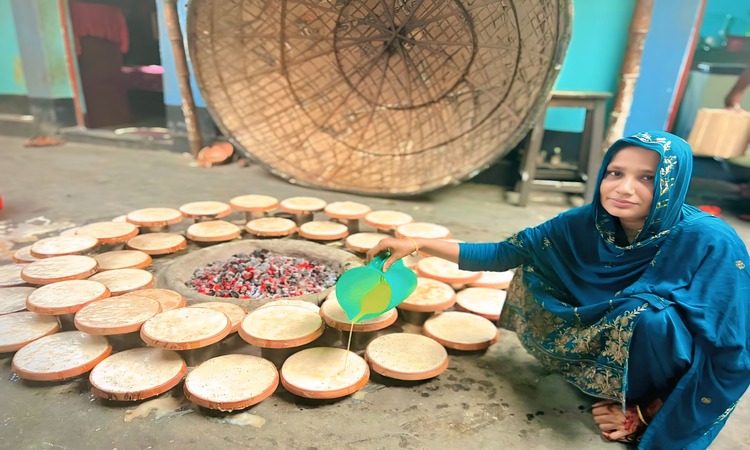
Aleya Begum of Bogura offers an answer. Where others might have seen five reasons to surrender, she found five lessons to learn, fueling a determination that carried her toward a better life.
Her story begins in 1998, when tragedy struck. Her husband, Babu Mia, lost his hand in an accident at his shipping job, a loss that shattered not only his body but their future as well. This tragedy set off a series of devastating setbacks. Their first attempt to rebuild, a bakery venture in Panchagarh, collapsed and wiped out their entire savings.
With nothing left, they went to Aleya’s father’s house. There, with her brothers’ help, they launched a yogurt business. But it too failed, leaving the family destitute.
They moved back to their village, where the inability to find work led to family tensions. Eventually, they sought shelter at her husband’s uncle’s home in Gabtali. Though they had a roofover their heads, they had no income. Sleepless nights and hunger became common, but one hope remained: with a small amount of capital, they could rebuild.
That chance came when Aleya and her husband discovered BURO Bangladesh’s Gabtali Branch. Microfinance became more than a loan. It became a partner that believed in their will to rise again.
In 2003, Aleya’s rebuilding beganwith a 3,000 BDT loan from BURO Bangladesh. She used the money to buyyogurt-making tools and started from her uncle’s kitchen. Her husband took tothe streets, selling yogurt door to door and along the footpaths. This time,their hard work finally paid off. People loved the product.
As the business grew, Aleyarented a small shop in Gabtali and named it New Model Doi Ghor. Today, thatshop supports four workers across production and sales.
Fourteen years later, the couplewelcomed their first child. By 2012, they had purchased land and built theirown home and production site on 11 decimals of land.
Since 2003, Aleya has remained a dedicated member of BURO Bangladesh, taking out 13 loans to reinvest and growth business. She reflects, “The first small loan BURO Bangladesh gave us was the breakthrough of our lives. They believed in my determination and have been a constant support for decades.”
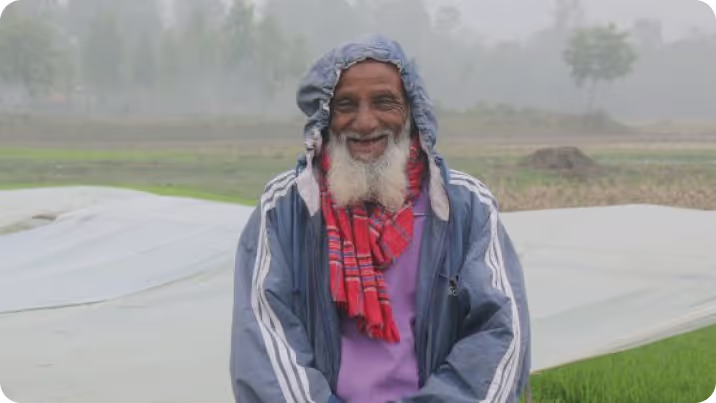
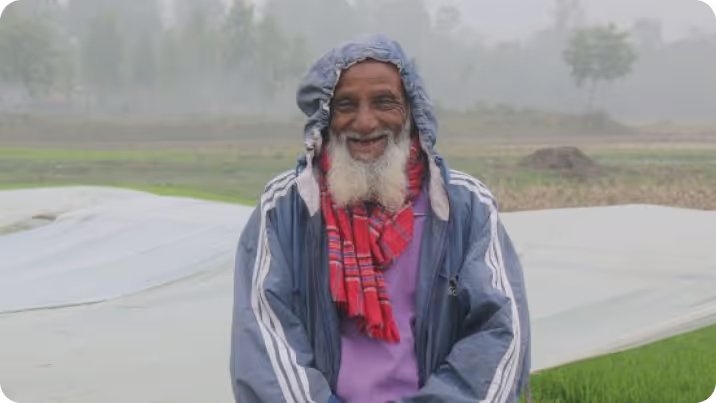
Farmers used to worry about potential crop damage during winter due to heavy fog. BURO Bangladesh’s Small and Marginal Farmers Support Project is working to change this concern by introducing a modern farming method. Farmers are already beginning to see the benefits, confidently cultivating winter crops without fear of loss.
Abdul Halim from Madhupur, for instance, experienced crop yellowing and stunted growth due to fog in previous winters. This year, however, his crops are thriving, demonstrating the transformative impact of the new techniques.
















.svg)
.svg)



.jpeg)
.jpg)
.jpg)
.jpg)